SmithJoliya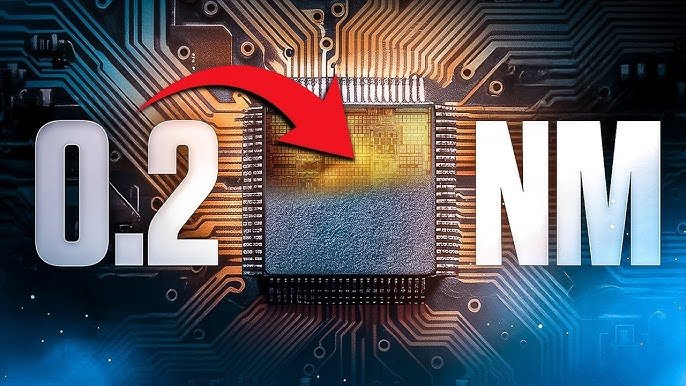
In the grand theater of human innovation, we often look to the stars for the “next big thing.” However, the most significant revolution of the 21st century is happening in the opposite direction—down in the invisible realm of the ultra-small. The nanometer (nm), a unit of measurement so tiny it defies human intuition, has become the most powerful currency in modern technology. From the smartphone in your pocket to life-saving medical treatments, the power of “small” is fundamentally rewriting the rules of what is possible.
Understanding the Scale: What is a Nanometer?
To appreciate the impact of nanotechnology, one must first grasp the sheer scale of a nanometer. A nanometer is one-billionth of a meter ($10^{-9}$ meters).
To put this into perspective:
-
A single sheet of paper is about 100,000 nanometers thick.
-
A strand of human DNA is roughly 2.5 nanometers wide.
-
If a marble were a nanometer, then one meter would be the size of the entire Earth.
At this level, the classical laws of physics begin to blur, and quantum mechanics take over. Materials start to behave differently—gold can appear red or purple, and chemically inert substances can become powerful catalysts. This “Goldilocks zone” of measurement is where the future of tech is being forged.
How Nanometer Precision Slashes Carbon Footprints
We often talk about speed, but the true hero of the nanometer race is Thermal Efficiency. As transistors shrink to the 3nm scale, they require significantly less voltage to switch states. This means data centers—the backbone of the internet—can process trillions of operations while consuming 30% less power. For the end-user, this translates to “all-day” battery life and devices that stay cool even under heavy workloads.
Moore’s Law and the Shrinking Transistor
For decades, the tech industry followed Moore’s Law, which predicted that the number of transistors on a microchip would double every two years. To achieve this, engineers had to shrink transistors to the nanometer scale.
When you reduce the size of a transistor:
-
More Density: You can fit billions of more switches on a single silicon die.
-
Speed: Electrons have a shorter distance to travel, making the processor faster.
-
Efficiency: Smaller transistors require less power, which leads to better battery life for laptops and smartphones.
The Challenge of Quantum Tunneling
As we approach the 1nm limit, we face a massive hurdle: Quantum Tunneling. When parts of a chip become too small, electrons can “leak” through barriers, causing heat and data errors. The future of tech depends on how scientists use “Gate-All-Around” (GAA) transistor structures to control these rebellious electrons at the nano-scale.
Molecular Marksmanship: How Nanobots are Transforming Precision Oncology
The future of medicine is moving away from “one-size-fits-all” treatments toward Targeted Drug Delivery Systems (TDDS). Using lipid-based nanoparticles, doctors can now encapsulate toxic chemotherapy drugs, ensuring they only unlock when they encounter the specific pH level of a tumor. This “biological sniper” approach eliminates the devastating side effects of traditional treatment. Furthermore,
Nanomedicine: The Targeted Assassin
Traditional medicine is often like “carpet bombing”—a drug enters the body and affects everything. Nanomedicine changes this. Scientists are developing nanoparticles designed to carry medication directly to cancer cells while leaving healthy cells untouched.
-
Nano-biosensors: These can circulate in your bloodstream to detect diseases like Alzheimer’s or cancer years before symptoms appear.
-
Smart Bandages: Infused with silver nanoparticles to kill bacteria instantly and speed up tissue regeneration.
Green Energy and Sustainability
The transition to clean energy is a materials science problem, and the solution is nanometric.
-
Solar Power: Nano-coatings can make solar panels 30% more efficient by capturing a wider spectrum of sunlight.
-
Battery Tech: Using carbon nanotubes in lithium-ion batteries allows them to charge faster and hold a charge longer, which is the “holy grail” for the Electric Vehicle (EV) industry.
Advanced Materials: The Era of Carbon Nanotubes and Graphene
The “Power of Small” is also giving us “Super Materials.” By manipulating atoms at the nanometer level, we have created substances that shouldn’t logically exist.
-
Graphene: A single layer of carbon atoms arranged in a nanometer-scale lattice. It is 200 times stronger than steel, more conductive than copper, and almost completely transparent.
-
Carbon Nanotubes (CNTs): These are cylindrical molecules that are being used to create ultra-lightweight aerospace components and even have the potential to make “Space Elevators” a reality in the next century.
The Security and Ethics of the Nano-World
With great power comes great responsibility. As we master the nanometer, we must also address the risks.
-
Nanotoxicity: Because nanoparticles are so small, they can cross the blood-brain barrier. We must ensure that “nano-waste” does not become a new form of environmental pollution.
-
Privacy: Nano-scale cameras and sensors could make surveillance invisible, raising massive concerns about personal privacy in the digital age.
Conclusion: A Future Built on Atoms
The journey from the steam engine to the 2nm processor is a testament to human curiosity. We have moved from manipulating wood and steel to manipulating the very building blocks of reality. The nanometer is no longer just a measurement; it is the frontier of our species’ potential.
As we look toward the next decade, the “Power of Small” will be the silent engine behind artificial intelligence, quantum computing, and a longer, healthier human life. We are no longer limited by the size of our tools, but only by the scale of our imagination.
Ending Note
Writing about the nanometer scale reminds us that the most significant changes often happen where we cannot see them. If you found this deep dive into the world of nanotechnology insightful, consider how many billions of nanometer-scale transistors worked together just to display these words on your screen!


 abraham.lion