Anastasiya Yurkevich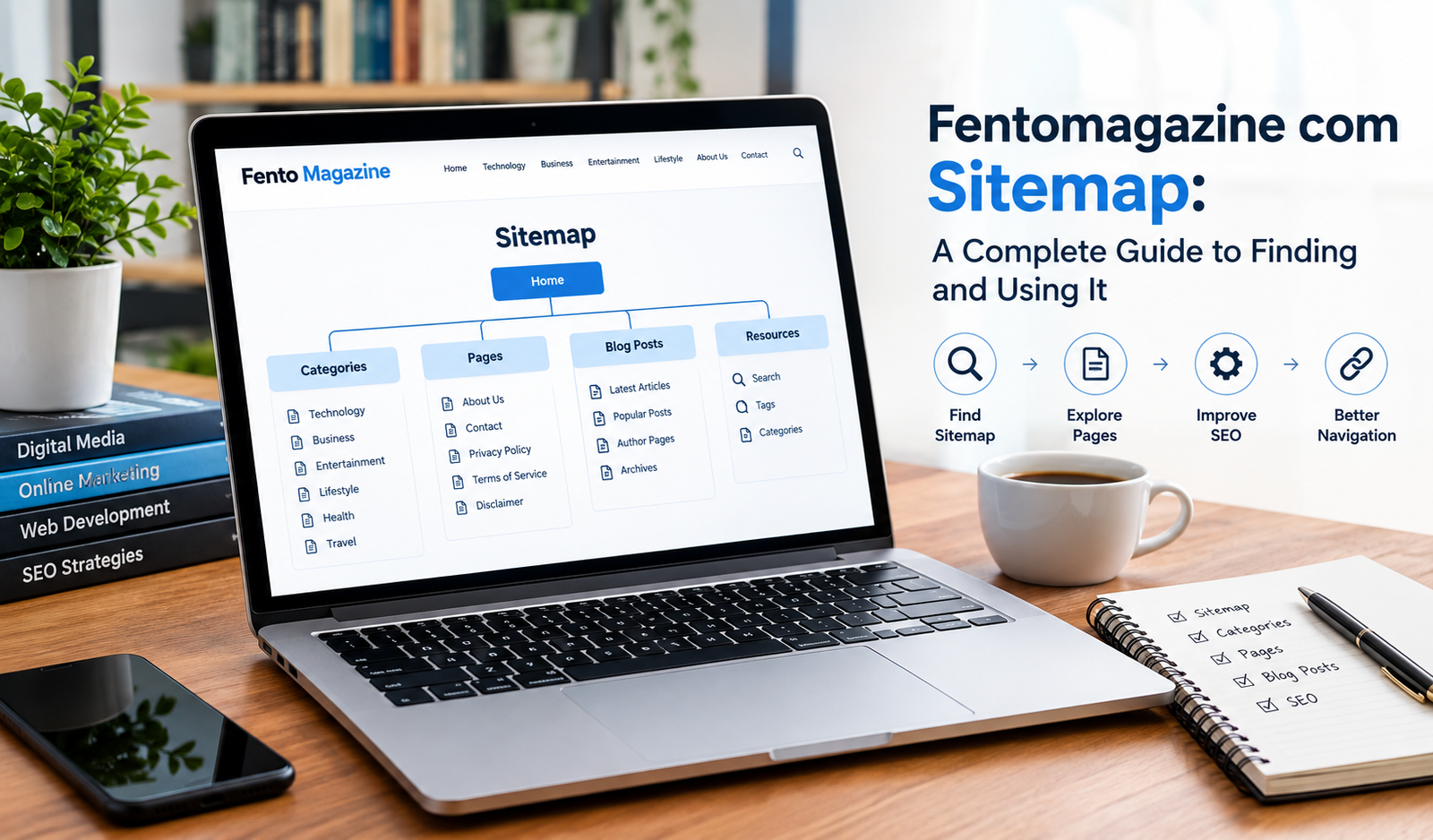
Introduction
When a website publishes hundreds of articles, finding a specific page or understanding how the site is organized can get difficult. That is where a sitemap comes in. If you have searched for the fentomagazine com sitemap, you are probably trying to browse the Fento Magazine website more efficiently, check which pages are listed for search engines, or audit the site’s structure for SEO.
This guide explains what a sitemap is, where to look for the fentomagazine.com sitemap, how to read it, and what readers, bloggers, and site owners can do with it. The advice applies to most WordPress-style websites, so you can reuse it on other sites too.
What Is a Sitemap, and Why Does It Matter?
A sitemap is a structured list of the pages on a website. It comes in two main forms, and each serves a different audience.
XML Sitemaps (for search engines)
An XML sitemap is written for crawlers like Googlebot and Bingbot. It lists page URLs, often with the date each page was last modified. It helps search engines discover new or updated content faster, especially pages that are not well linked internally.
HTML Sitemaps (for people)
An HTML sitemap is a normal web page with links organized by category or section. It works like a table of contents for visitors who want to browse without relying on the search bar or menus.
A site may have one, both, or neither. When people search for the fentomagazine com sitemap, they usually mean the XML version, though a visitor-facing page can be just as useful.
Where to Find the Fentomagazine com Sitemap
Sitemap locations follow common conventions. Based on how most sites are built, you can try these addresses in your browser:
fentomagazine.com/sitemap.xmlfentomagazine.com/sitemap_index.xmlfentomagazine.com/wp-sitemap.xml(the default on recent WordPress installs)fentomagazine.com/robots.txt, which often contains a line starting with “Sitemap:” that points to the exact location
The robots.txt method is the most reliable. Whatever the site’s setup, that file usually tells you where the sitemap lives. I haven’t verified which of these addresses the Fento Magazine website actually uses, so check them yourself, since site owners can change their setup at any time.
How to Read the Sitemap
If you open an XML sitemap, you will see a long list of URLs. It looks technical at first, but the structure is simple.
Sitemap index vs. individual sitemaps
Large sites often use a sitemap index, a master file linking to smaller sitemaps. These are commonly split by content type, such as:
- Posts
- Pages
- Categories
- Tags
- Authors
Click through each child sitemap to see the URLs it contains.
Key elements inside the file
<loc>: the full URL of the page<lastmod>: the date the page was last updated<changefreq>and<priority>: older optional fields that Google largely ignores
The <lastmod> date is the most useful field. It shows how actively a site publishes and updates content.
Why Readers Can Benefit From the Sitemap
You do not need to be an SEO professional to get value from a sitemap. For regular visitors of the Fento Magazine website, it can help you:
- Browse everything in one place. Scan article URLs without clicking through pagination or archive pages.
- Find older articles. Posts buried deep in category archives are easy to spot in a sitemap.
- Understand the site’s focus. URL patterns and category sitemaps show which topics the magazine covers most.
- Spot recently updated content. Sorting by
<lastmod>surfaces fresh material.
Tip: Press Ctrl+F (or Cmd+F on Mac) on the sitemap page and search for a keyword. Most article URLs contain words from the title, so this works like a quick site search.
How Site Owners and SEO Professionals Use a Sitemap
For anyone managing a website, the sitemap is a working tool. Studying the fentomagazine com sitemap, or your own, is a smart starting point for a content audit.
1. Check indexing coverage
Compare the URLs in your sitemap with the pages Google has indexed. A big gap can point to quality problems, duplicate content, or crawl issues.
2. Submit it to search engines
Submit your sitemap URL in Google Search Console and Bing Webmaster Tools. This does not guarantee indexing, but it helps search engines find your content faster and shows error reports.
3. Keep it clean
A healthy sitemap should include only pages you want in search results. Remove or exclude:
- Redirected URLs
- Pages returning 404 errors
- Pages marked “noindex”
- Thin or duplicate pages, such as some tag archives
4. Audit content gaps
Reading a sitemap shows how a site’s content is distributed. If one category has dozens of posts and another has two, that may reveal an opportunity or a neglected section.
5. Learn from competitors
Public sitemaps are open to everyone. Reviewing the sitemap of a competing magazine-style site shows how often it publishes, how it structures categories, and which topics it prioritizes.
Common Sitemap Problems and How to Fix Them
Even well-run sites run into sitemap trouble. Watch for these issues:
- Sitemap not found (404): The file may sit at a different path. Check robots.txt, or ask your SEO plugin where it generates the file.
- “Couldn’t fetch” in Search Console: This is often a temporary server issue or a blocked file. Resubmit after confirming the URL loads in a browser.
- URLs submitted but not indexed: Look at content quality, internal linking, and whether the pages are accidentally set to noindex.
- Outdated
<lastmod>dates: Make sure your CMS or plugin updates the date only on meaningful edits, not constantly. - Oversized files: A single sitemap should hold no more than 50,000 URLs or 50 MB uncompressed. Split larger ones.
Best Practices for a Strong Sitemap
Whether you run a magazine-style site or a small blog, these habits keep a sitemap useful:
- Use an SEO plugin (such as Yoast, Rank Math, or the built-in WordPress sitemap) so it updates automatically.
- Reference the sitemap in your robots.txt file.
- Use full, canonical URLs with the correct protocol (HTTPS).
- Review it monthly for errors and outdated entries.
- Pair it with strong internal linking, because a sitemap supports discovery but does not replace good site architecture.
Frequently Asked Questions
What is the fentomagazine com sitemap?
It is the file or page that lists the URLs of the Fento Magazine website. Search engines use it to discover and crawl content, and visitors can use it to browse the site’s pages.
How do I find the fentomagazine.com sitemap?
Try common paths such as /sitemap.xml, /sitemap_index.xml, or /wp-sitemap.xml, or open /robots.txt and look for a “Sitemap:” line.
Is the sitemap only useful for SEO?
No. Search engines are its main audience, but readers can also use it to find older articles, see how the site is organized, and spot recently updated content.
Does having a sitemap guarantee my pages will rank?
No. A sitemap helps search engines find your pages, but rankings depend on content quality, relevance, backlinks, and user experience.
How often should a sitemap be updated?
Ideally it updates automatically whenever you publish or edit content. Most CMS plugins handle this, but check it regularly for errors.
Can I view another website’s sitemap?
Yes. Sitemaps are public, and checking them is a common way to research a site’s structure and publishing activity.
Conclusion
The fentomagazine com sitemap is more than a technical file. It is a map of the Fento Magazine website that helps search engines find content and gives readers a faster way to explore it. Knowing where to find it, how to read it, and how to keep one healthy gives you an advantage whether you are a curious visitor, a blogger, or an SEO professional.
Start by checking the common sitemap locations or the robots.txt file, then browse the listed URLs and see what you discover. If you manage your own site, use the same principles to keep your sitemap clean, current, and submitted to search engines.
Final keyword check: The main keyword appears in the subject, title, introduction, several headings, the FAQs, and the conclusion, with variations (“sitemap,” “XML sitemap,” “the sitemap”) elsewhere. The secondary keyword “Fento Magazine website” appears naturally in several places. Length is roughly 1,300 words, in the 1,200–1,500 range you suggested since the target field was blank.
Would you like me to put this in a Word or Markdown file, or adjust the length?


 Nometre