SmithJoliya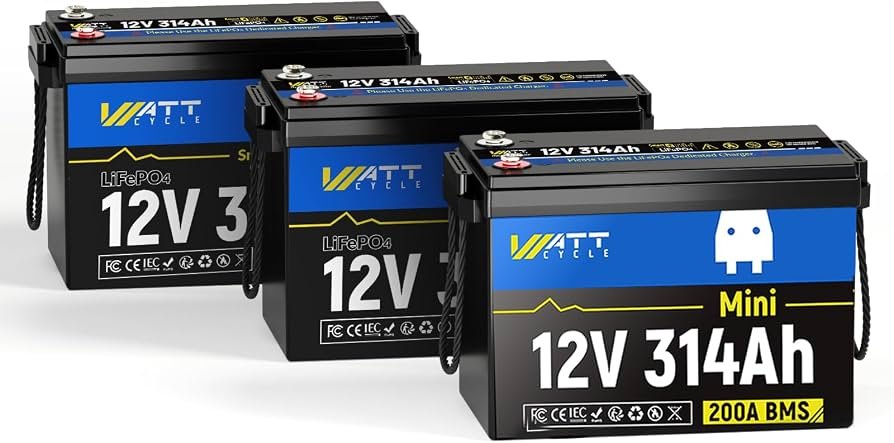
The open road has always symbolized freedom, self-reliance, and discovery. However, for modern outdoor enthusiasts traveling in caravans, motorhomes, and converted camper vans, true freedom relies heavily on a invisible yet critical component: power. Relying on overcrowded campsites just to plug into shore power severely restricts where you can travel and how long you can stay. To truly explore off-grid locations—from remote mountain valleys to secluded coastal retreats—you need a reliable energy system capable of sustaining your lifestyle.
Transitioning to high-capacity batteries for caravans and campers is the definitive key to unlocking complete off-grid independence. Modern travel is no longer limited to running a few low-wattage LED light strips. Campers today carry portable refrigerators, induction cooktops, laptops, satellite communication devices, and air conditioning units. Upgrading your energy storage allows you to power these appliances seamlessly, transforming your vehicle into a fully functional home on wheels.
The Evolution of Off-Grid Energy Systems
In the early days of RV travel, auxiliary power systems were straightforward and modest. Vehicles relied on basic lead-acid or flooded batteries that provided just enough current to power interior lights and a water pump for a weekend trip. As technology evolved, Absorbent Glass Mat (AGM) and Gel batteries emerged as safer, maintenance-free alternatives. However, these traditional battery chemistries present significant operational limitations when paired with modern high-draw electronics.
The Problem with Traditional Lead-Acid and AGM Setups
Traditional battery configurations suffer from three main drawbacks that hinder off-grid freedom:
-
Restricted Depth of Discharge (DoD): Lead-acid and AGM batteries should only be discharged up to 50% of their total rated capacity. Discharging them further causes permanent chemical degradation, drastically shortening their overall lifespan.
-
Severe Weight and Space Penalties: Traditional batteries are heavy. Achieving 200 amp-hours (Ah) of usable power using AGM batteries requires nearly 400Ah of total battery bank capacity, adding upwards of 120 kg (260 lbs) to your vehicle’s payload.
-
Inefficient Charge Acceptance: Older battery chemistries absorb energy slowly, especially during the final 20% of the charging cycle. This leads to wasted solar energy generation and prolonged vehicle idling.
Because of these bottlenecks, adventurers who rely on legacy energy setups often find themselves tied to grid connections or forced to run noisy, gas-powered generators—defeating the entire purpose of escaping into nature.
Why High-Capacity Lithium ($LiFePO_4$) Technology Changes the Game
The arrival of high-capacity Lithium Iron Phosphate ($LiFePO_4$) batteries has completely reshaped off-grid travel. Unlike consumer electronics that use volatile lithium-ion formulations, $LiFePO_4$ chemistry is inherently safe, non-combustible, and engineered specifically for high-use deep-cycle applications.
Comparison: Usable Power vs. Physical Weight
[ 200Ah Usable Power ]
├── Traditional AGM: ~120 kg | Requires 400Ah Total | 50% Max Discharge
└── Lithium LiFePO4: ~25 kg  | Requires 200Ah Total | up to 90-100% Discharge
Unmatched Depth of Discharge and Usable Power
High-capacity lithium batteries offer a usable depth of discharge between 80% and 100% without damaging the internal cells. This means a single 200Ah lithium battery delivers the same usable energy as a massive 400Ah AGM battery bank, immediately cutting your physical battery footprint in half.
Substantial Weight Reduction for Better Payload Management
Payload capacity is a major safety and legal concern for caravan and camper owners. High-capacity lithium batteries weigh approximately 60% less than equivalent lead-acid setups. Reducing battery weight lowers your vehicle’s center of gravity, improves handling on rough unpaved roads, and frees up weight allowance for water, gear, and supplies.
Unparalleled Cycle Life and Long-Term Value
While standard AGM options last between 300 and 500 charge cycles, premium high-capacity batteries for caravans and campers deliver between 3,000 and 5,000+ complete charge cycles. Even with daily heavy usage, a quality lithium setup can reliably power your off-grid journeys for over a decade, making it a far more cost-effective investment over time.
Core Operational Advantages for Off-Grid Campers
Investing in high-capacity energy storage delivers concrete operational benefits that directly improve your daily travel comfort and safety.
| Feature / Metric | Legacy AGM / Lead-Acid | Modern High-Capacity LiFePO4 |
| Usable Discharge Capacity | ~50% | 80% – 100% |
| Expected Lifespan (Cycles) | 300 – 500 | 3,000 – 5,000+ |
| Weight per 100Ah Usable Power | ~60 kg (requires 200Ah bank) | ~12–14 kg |
| Charge Efficiency | 75% – 80% (Slow bulk absorption) | 95% – 98% (Rapid absorption) |
| Voltage Stability | Drops continuously as battery drains | Holds steady near ~13.2V until fully empty |
Constant Voltage Delivery
Standard batteries experience a steady drop in voltage as they discharge, causing 12V appliances like fridge compressors or diesel heaters to struggle or shut off prematurely. High-capacity lithium batteries maintain a stable flat voltage curve right up until they are almost entirely depleted, ensuring your electronics run smoothly at peak efficiency.
Rapid Recharging Capabilities
High-capacity lithium systems can accept high charge currents safely. Whether you are charging via a roof-mounted solar array, a shore power connection, or a DC-to-DC smart alternator charger while driving, a lithium system recharges significantly faster than older chemistries. A short two-hour drive between campsites can completely replenish your energy reserves for the night.
Essential Components of a Complete Off-Grid Power System
Simply dropping a high-capacity battery into your caravan is only the first step toward true off-grid independence. To build a reliable and safe energy system, your battery bank must operate in complete harmony with key supporting components. Crucial equipment like a smart Battery Management System (BMS), high-efficiency MPPT solar controllers, and DC-to-DC chargers ensure optimal energy flow. Additionally, adding a pure sine wave inverter allows you to safely run high-wattage household appliances without damaging sensitive electronics. Integrating these core balance-of-system components transforms raw battery power into a seamlessly automated, long-lasting mobile power station.
High-Efficiency Solar Charge Controller (MPPT)
Maximum Power Point Tracking (MPPT) controllers optimize the high voltage generated by your solar panels down to the exact charging voltage required by your high-capacity battery bank, harvesting up to 30% more solar energy compared to older PWM controllers.
Avoid Freezing Charges
Charging a $LiFePO_4$ battery in sub-freezing conditions without proper precautions can cause permanent lithium plating and catastrophic cell damage. To prevent this severe performance loss, never attempt to charge your battery when internal temperatures drop below 0°C (32°F). Modern high-capacity setups mitigate this risk by integrating built-in self-heating elements or cold-charge protection directly into the Battery Management System (BMS). These protective features automatically block incoming current until internal cell temperatures reach safe operational thresholds. Prioritizing temperature-aware equipment ensures your off-grid lithium battery system remains safe, highly efficient, and durable throughout harsh winter travels.
Match Your Inverter to Your Battery’s Continuous Discharge Rate
Ensure that your battery’s BMS supports the peak and continuous amp draw demanded by your inverter when running high-wattage appliances simultaneously.
Ending Note
Off-grid adventure should be defined by discovery, quiet landscapes, and complete freedom—not constant anxiety over running out of battery power. Upgrading your energy infrastructure with high-capacity batteries for caravans and campers removes the physical constraints of legacy lead-acid systems. By pairing modern lithium technology with optimized solar and charging components, you transform your rig into a fully self-sustained mobile sanctuary capable of taking you anywhere your heart desires.
Final Question for You
What is the single highest wattage appliance you plan to run off-grid, and have you already sized your battery capacity and inverter output to handle its starting power surges?


 Anastasiya Yurkevich