abraham.lion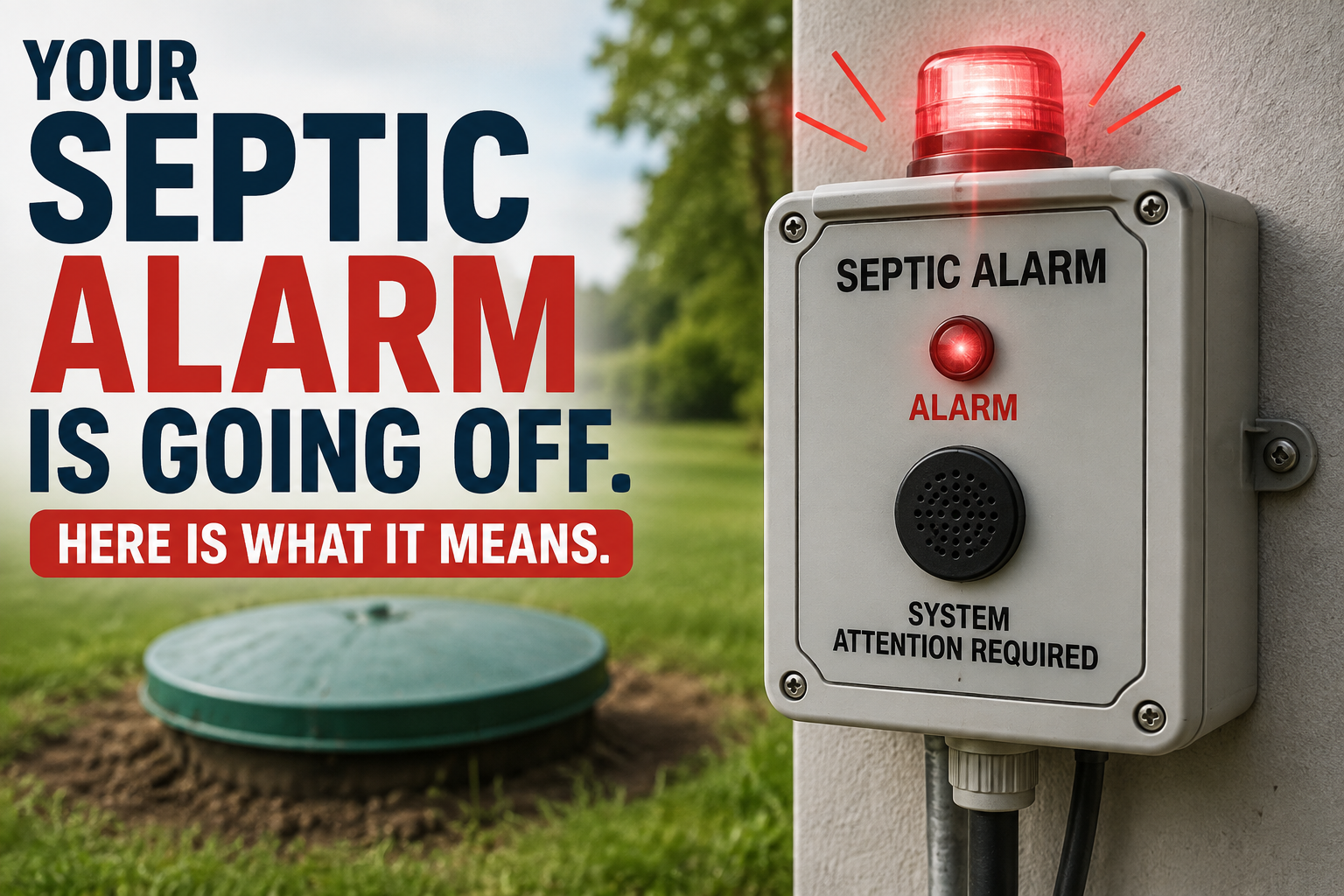
It usually starts at an inconvenient hour. A buzzer somewhere outside, or a red light on a gray box mounted to the side of the house, and no obvious explanation. If your property runs on an aerobic septic system, that panel is the system’s only way of telling you something has stopped working.
The good news is that an alarm rarely means catastrophe. The bad news is that ignoring one reliably turns a small repair into a large one. Here is how to read what it is telling you.
First, understand what the panel monitors
An aerobic system has electrical components a conventional septic tank does not: an air compressor feeding oxygen to the treatment chamber, usually a pump moving treated effluent to the dispersal area, and float switches tracking water levels. The panel watches all of it.
When any of those fails, the system does not stop accepting wastewater. It just stops treating it properly. Nothing changes inside the house, which is exactly why the alarm exists.
The four common causes
The air compressor has failed. This is the most frequent cause. Compressors run continuously for years and eventually wear out. Diaphragms crack, filters clog, motors seize. Without air, the aerobic bacteria die off within a day or two and the system reverts to poor treatment.
High water level in the pump tank. The effluent pump is not keeping up, either because it has failed, because a float switch is stuck, or because the discharge line is blocked. Water is rising toward a level it should not reach.
Electrical fault. A tripped breaker, a failed control board, a chewed wire, or a GFCI that popped after a storm. The system may be mechanically fine and simply not receiving power.
Hydraulic overload. A heavy water day or a running toilet pushing more volume through than the system can process.
What to do in the first ten minutes
Start with the things that are safe and quick:
- Silence the audible alarm if there is a mute button. The light stays on, which is what you want. Do not cut power to the whole panel.
- Check the breaker panel for a tripped breaker, and check any exterior GFCI outlet near the tank.
- Listen at the compressor housing. A working compressor makes a steady hum. Silence points straight at it.
- Reduce water use in the house immediately. No laundry, no dishwasher, short showers, until somebody looks at it.
- Check toilets for a running flapper, which is a surprisingly common trigger.
If a breaker reset brings the compressor back and the alarm clears, note the date. A breaker that trips repeatedly is a fault, not a fluke.
What not to do
Do not open tank lids. The gases in a septic tank can incapacitate a person quickly and this is the single most dangerous thing a homeowner can attempt. Do not disconnect the alarm to make the noise stop. Do not pour additives in hoping to fix a mechanical failure. Do not put pool chlorine in a chlorinator designed for wastewater tablets.
Why the clock matters
An aerobic system with a dead compressor stops producing treated effluent within roughly 48 hours. What continues leaving the system is closer to raw wastewater, and depending on your dispersal method that may be reaching the surface of your yard. That is a public health issue and, in most jurisdictions, a regulatory one.
A compressor replacement caught in the first week is a routine service call. The same failure found two months later can mean a saturated dispersal area and a much larger bill.
Build the maintenance habit instead
Most aerobic systems are required to be under a service contract with scheduled inspections through the year. Those visits catch worn compressors, failing floats, and clogged diffusers before the alarm ever sounds. Between visits, walk out to the panel once a month, confirm the compressor is running, and glance at the dispersal area for wet spots or odor.
When to call
If a breaker reset does not resolve it, or if the compressor is silent, that is a service call. The diagnosis often crosses trades, since the fault may sit in the control board and wiring rather than in the tank at all.
Homeowners across the Tulsa area, including Owasso, Collinsville, and Bartlesville, use Half Moon aerobic septic service for exactly that reason. The family-run team covers both the septic and electrical sides, so a control panel fault does not turn into two separate appointments. Their phones are answered around the clock and service is scheduled for the next available appointment.
An alarm is not a crisis. It is the system doing the one job it has, which is telling you before the yard does.


 Anastasiya Yurkevich